 Türkçe
 Deutsch
A Guide to e-Invoice Software in Turkey
How choosing the right e-invoice software gives you a compliant, environmentally friendly and efficient invoicing process in Turkey.
The key to digital transformation for SMEs
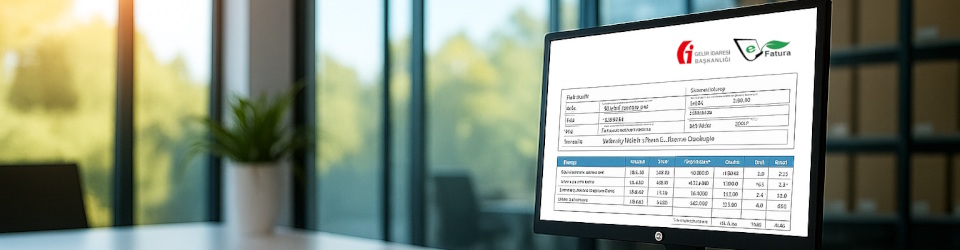
As digitalisation gathers pace, e-invoicing has become standard among small and medium-sized businesses in Turkey. The more businesses see how e-invoice software simplifies their operations, the more clearly they notice the drawbacks of traditional paper invoicing.
Having invoices printed, printing one after every sale, then putting it in an envelope and posting it was costly in both time and money. Now invoices are prepared and sent electronically in a few clicks, and buyer and seller are reconciled instantly.
A user-friendly system that complies with the requirements of the Turkish Revenue Administration (GİB) and makes issuing e-invoices easy can significantly improve your company's accounting. Although there are many options on the market for anyone looking for easy e-invoice software, finding the one that best fits your needs can be difficult. Analysing e-invoicing costs over the long term is also very important for protecting your budget.
In this article we look in detail at how to choose the right e-invoice software for your business, which features to look for and how these systems integrate with your accounting. That way you can save time and money while fully meeting your legal obligations.
The advantages of e-invoice software for businesses
E-invoicing has completely changed the way businesses handle invoices. E-invoice software offers many advantages over traditional paper invoices and greatly increases efficiency. So how exactly does it help?
Saving time and labour
In the past, invoices had to be printed by a print shop, printed again after every sale, put in envelopes and posted. These processes took a great deal of time and labour. Today issuing an e-invoice is as easy as pressing a few buttons. The hours staff used to spend preparing, sending and filing invoices can now go to more productive work.
Business owners can also let their employees focus on strategic matters rather than operational tasks. With easy e-invoice software, all invoicing can be done quickly through a simple interface, so your workflows continue without interruption.
Lower costs
In the long run, the cost of e-invoicing is much lower than traditional invoicing, because:
- you save on consumables such as paper, toner and envelopes
- postage and courier costs disappear
- you no longer need archive space to store invoices physically
- you can manage invoicing with fewer staff
With careful planning when buying e-invoice credits, you can reduce your cost per transaction even further; longer-term credit bundles are usually cheaper per unit.
Faster collection and easy reconciliation
One of the biggest advantages of e-invoicing is that the invoice reaches the buyer immediately, which speeds up collection. The e-invoice system also makes reconciliation between buyer and seller much clearer.
With an e-invoice viewer you have instant access to past invoices, which makes period-end reconciliation and audits easier. Software for receiving e-invoices also records incoming invoices in the system automatically, so nothing gets lost.
With e-invoice design tools you can create invoice templates that match your brand identity and give your customers professional-looking documents. Whether you are a small business or a large company, e-invoice software helps you grow by improving operational efficiency, saving costs and keeping everything in order.
The role of e-invoice software in accounting
E-invoice software has fundamentally changed the way accounting departments work. Accountants who used to deal with paper invoices can now work more efficiently with digital systems. This software speeds up not just invoicing but your entire accounting process.
Easy bulk invoice processing
Accountants who used to enter every invoice one by one can now import hundreds of invoices at once with e-invoice software. This saves a great deal of time, especially at month end, and removes the risk of errors when entering invoices individually.
Bulk processing means that:
- less time is spent on data entry
- human errors are kept to a minimum
- financial reports can be prepared faster
Integrating incoming and outgoing e-invoices
Good e-invoice software should manage incoming and outgoing invoices in a fully integrated way, so that all your invoices are tracked in the same system. Reconciliation becomes easier and your financial data more accurate.
Automatically matching recurring invoices in particular greatly reduces the workload of accounting staff. Monthly electricity or internet bills, for example, can be posted to the accounting system in a few clicks once their product codes are matched automatically.
Automatic data transfer with e-invoice receiving software
With e-invoice receiving software, incoming invoices are recorded in your system automatically. This removes manual data entry, saves time and improves data accuracy.
An e-invoice viewer also lets you check incoming invoices immediately. Once received through GİB, they are transferred to your accounting software automatically, so your accounting team can focus on more valuable work such as analysis and strategy instead of data entry.
When choosing easy e-invoice software, look for strong integration features as well as a simple, clear interface. They will speed up your accounting and make your financial management more effective.
Features good e-invoice software should have
When choosing e-invoice software, it is very important to look for certain core features. They automate your invoicing and help you comply with legal requirements.
Easy issuing and sending
The software should convert invoices into the e-invoice format effortlessly. Ideally, invoices should not be sent immediately but collected in a list for a final check, so you can send them in bulk and save time. Checking invoices while issuing e-invoices is very important for catching errors early.
Basic and commercial invoice scenarios
Good e-invoice software should support both the BASIC (TEMEL) and COMMERCIAL (TİCARİ) scenarios of the Turkish e-invoice system. The basic scenario is usually used when payment is made in advance and the buyer is not expected to object. The commercial scenario is used for invoices that need an approval mechanism with particular customers. Access to both is vital for businesses that work with different customer groups.
Customisable design with e-invoice design tools
With e-invoice design tools you can customise the look of your invoices to match your corporate identity. This raises brand awareness and gives a professional impression.
Preview with an e-invoice viewer
Seeing the final version of the invoice in an e-invoice viewer before sending lets you correct any mistakes, so invoices should always be previewable before they go out.
Automatic matching of incoming invoices
Handling incoming e-invoices should also be simple and clear. The product codes of recurring invoices in particular should be matched automatically and posted to the accounting system in a few clicks, which greatly reduces time spent on data entry.
Tracking GİB status codes
You should be able to follow the GİB status codes of the e-invoices you send. Final status codes 1200 or 1300 indicate successful delivery, and action should be possible for any other code. Successfully sent invoices should also be emailed to the customer in both PDF and XML format.
Cost, regulation and sustainability criteria
Besides technical features, you also need to consider cost and legal requirements when choosing e-invoice software. Examining these criteria carefully will add value to your business in the long run.
E-invoice credits and long-term cost analysis
E-invoice software usually works with a credit system: one credit is used for every invoice sent or received. This may look like a small cost at first, but it can add up for businesses with high invoice volumes.
For businesses that issue thousands of invoices a year, the cost of e-invoice credits must be sustainable in the long term. Watch out in particular for providers that charge little at first and much more later. To avoid this, discuss credit costs clearly with your provider and get a written commitment.
Full compliance with current regulations
Good e-invoice software must comply fully with the regulations published by the Revenue Administration (GİB). Because the rules on e-transformation change often, the software must adapt to these changes in time.
Software that does not comply can lead to rejected invoices and even problems in tax audits. The e-invoice software you choose should therefore have an infrastructure that follows regulatory changes and is updated quickly.
Delivery note support
If your business uses delivery notes, the numbers and dates of the delivery notes converted into an invoice must appear in the e-invoice XML. Good e-invoice software should handle this automatically.
Without automatic delivery note integration, you have to track manually which delivery notes belong to which invoice, which wastes time and leads to errors.
Preventing errors by checking the customer's registration
Your e-invoicing software should check in real time whether your customer is registered for e-Invoice. This prevents mistakes such as sending an e-Archive invoice to a customer who is registered for e-Invoice.
If the check is not automatic, you have to do it manually; otherwise, if an error comes back after the invoice has been sent, you have to repeat the whole process. Choosing easy e-invoice software with this feature keeps your operations running smoothly.
Key takeaways
Choosing e-invoice software is a critical decision in your business's digital transformation. The right choice increases operational efficiency and saves money in the long run.
- E-invoice software can save up to 80% of the time spent on invoicing and eliminates paper, postage and archive costs.
- Bulk invoice processing and automatic data transfer speed up accounting and keep human errors to a minimum.
- GİB compliance, registration checks and up-to-date regulatory support are essential to avoid legal problems.
- Analyse credit costs over the long term: costs that look low at first can add up at high volumes.
- Delivery note integration, e-Archive support and automatic matching keep your operations running without interruption.
Good e-invoice software is not just a tool for issuing invoices but a strategic investment that optimises all your financial processes. With the right choice, your business takes an important step in its digital transformation.
Frequently asked questions
Q1. What should I look for when choosing e-invoice software? Ease of use, GİB compliance, automatic data transfer, bulk invoice processing, cost-effectiveness and support for current regulations. Delivery note integration and checking the customer's registration are also important criteria.
Q2. What advantages does e-invoice software offer businesses? It saves time and labour, reduces costs and makes reconciliation and tracking easy. It also eliminates paper, toner and archiving costs and increases operational efficiency.
Q3. How is an e-invoice issued? With GİB-approved software or the service of a private integrator. You enter the invoice details in the software, check them and send the invoice. Some software makes the process easier with features such as bulk processing and automatic data transfer.
Q4. How are e-invoicing costs calculated? Usually through a credit system: one credit is used for every invoice sent or received. Businesses should analyse costs over the long term based on their annual invoice volume and agree clear prices with their providers.
Q5. How does e-invoice software affect accounting? It significantly speeds up and automates accounting. Bulk processing, automatic data transfer and the integration of incoming and outgoing invoices reduce time spent on data entry, minimise errors and let financial reports be prepared faster.
Conclusion
Choosing the right e-invoice software is critical for your business's digital transformation. As we have seen, a good e-invoice solution saves time and labour and significantly reduces your costs. Features such as bulk invoice processing and automatic data transfer in particular make your accounting more efficient and let your staff focus on more strategic work.
Besides technical features, analyse the costs carefully when choosing. E-invoice credit costs must be sustainable for your business in the long term. Full compliance with GİB regulations, regular updates and registration checks are also very important for avoiding problems later.
E-invoice software that is easy to use and offers strong integration will help your business meet its legal obligations in full while increasing operational efficiency. Saying goodbye to paper invoices is a solid step on your digital transformation journey.
Keeping the criteria in this article in mind when choosing the e-invoice software that best fits your needs will save you time and money in the long run. By automating your invoicing with the right software, you can focus more on your business and gain a competitive edge.
Noyax e-invoice software offers all the features described in this article and gives businesses an effortless e-transformation experience. With its user-friendly interface, full regulatory compliance and automated workflows, Noyax lets SMEs manage their e-invoicing quickly, securely and without errors.
Create your free trial account now and see for yourself how Noyax's powerful features make your work easier and bring order and efficiency to your accounting.